

Is Mont Blanc suitable for everyone? A complete expert analysis
Prepare with purpose. Summit with confidence
Tue 18 Nov 2025
Is Mont Blanc suitable for Everyone? A Complete Expert Analysis
Wanna climb Mont Blanc? Check our 5-day PROGRAM and see what's included and all the details!
In recent years, KooKoo Climb has positioned itself among the top five companies guiding ascents to Mont Blanc, season after season, both in the number of climbers we take to the summit and the quality of our guiding operations. Thanks to this extensive experience, we want to address one of the most common questions we receive: Is Mont Blanc a mountain suitable for everyone?
Mont Blanc is one of the most desired mountains on the planet, an alpine icon and the highest peak in the Alps. Every mountaineer, climber, or aspiring alpinist dreams of standing on its summit. Most begin with the Goûter Route, the normal and least technical way up the mountain, and later progress to more technical lines such as the Innominata Ridge or the 4000s Route.
Because the Goûter Route is perceived as “not very technical,” many hikers with limited alpine experience believe they can reach the summit as long as they are accompanied by a mountain guide. This raises an essential question: Can any reasonably fit hiker climb Mont Blanc safely?
To answer this accurately, we need to analyze several critical factors.
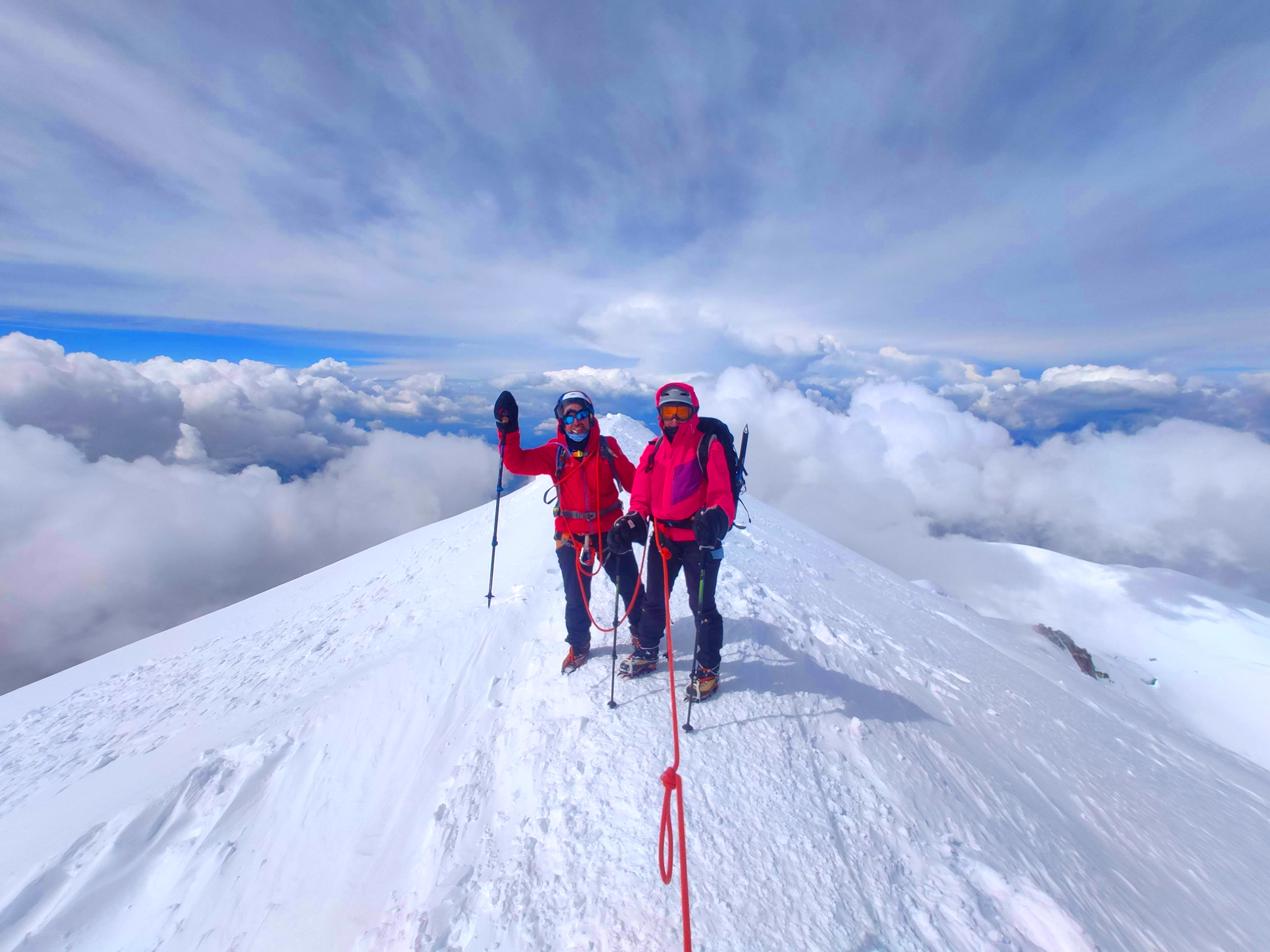
Mont Blanc summit 4,810m
1. Prior experience: Is basic hiking experience enough?
A successful Mont Blanc ascent requires far more than being a weekend hiker. While the Goûter Route does not feature highly technical climbing sections, it still demands excellent cardiovascular conditioning. This is because the ascent involves continuous upward movement for several hours at altitude, on mixed terrain, under rapidly changing weather conditions.
Anyone attempting Mont Blanc must be fully used to:
Gaining 1,000–1,300 meters of elevation in a single day.
Moving efficiently for long periods without becoming exhausted.
Maintaining a steady pace at altitude.
Wearing and using crampons and carrying an ice axe with confidence.
A key point many underestimate: Mont Blanc is not the place to try crampons for the first time. Guides are there to ensure safety, not to teach a crampon workshop in the middle of a glacier, specially if you are doing our 3-day climb. If, on the other hand, you are doing our 5-day program, that includes 2 extra days for acclimatization and preparation, so we can teach you properly.
At KooKoo Climb, we assess each climber’s experience beforehand and provide a structured recommendation to ensure that participants already feel comfortable, efficient, and relaxed when gaining large elevation totals.
2. Does using crampons before mean you are ready for Mont Blanc?
Not necessarily. Many hikers have worn crampons during non-glaciated ascents, such as volcanic peaks or high Andean summits where the terrain, although high, is often dry and without crevasses.
Mont Blanc, however, is a proper alpine ascent, which means:
You must travel roped to your guide or partner.
The terrain may hide crevasses under fresh snow, even early in the season.
Conditions vary daily, from deep snow to hard ice.
Mixed terrain (snow, ice, and rock) requires refined foot technique.
Therefore, having used crampons a few times is not equivalent to being ready. What matters is whether you’ve used them in a real alpine environment, ideally involving glacier travel, exposed sections, or rocky transitions.
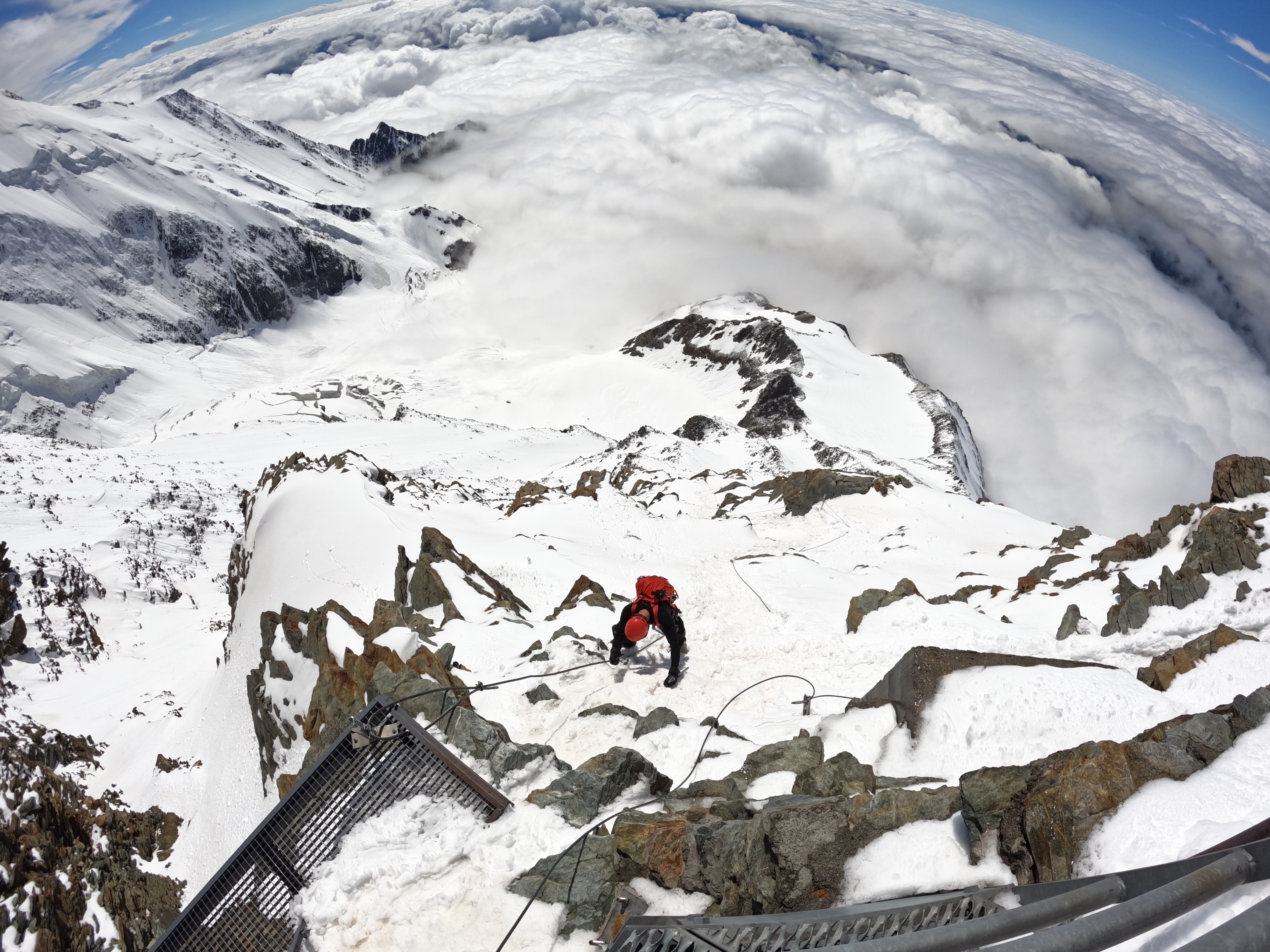
The section between Tête Rousse and Goûter
3. Technical difficulty: Is the Goûter Route really “easy”?
The Goûter Route is the least technical way to reach the summit of Mont Blanc, but that doesn'tt mean it's simple.
Between the Tête Rousse Hut (3,167m) and the Goûter Hut (3,835m), climbers must ascend a long rocky section equipped with cables. Depending on conditions, this part can involve:
Crampons on rock.
Crampons on hard snow.
Crampons on bulletproof ice.
Short exposed sections requiring balance and precise movement.
More than half of the entire route requires the rope, and the higher sections demand efficient pacing, focus, and resilience in cold, windy, and low-oxygen environments.
Even strong hikers can struggle if they underestimate the altitude or the length of the climb. Summit day typically involves 10–12 hours of continuous movement.
4. Objective hazards: Understanding the risk of the Big Couloir
One of the most well-known dangers of the Goûter Route is the Grand Couloir, often called the “Big Couloir.” Every climber must cross this section, a 30-meter horizontal traverse under a steep gully where rockfall is common during warm periods of the day.
Here’s what makes it dangerous:
Rising temperatures melt the ice holding rocks in place.
This destabilization can cause rockfall, sometimes with blocks as large as a car.
The risk increases dramatically after mid-morning.
This is why all teams begin their ascent very early, crossing the couloir at the coldest, and therefore safest moment.
In extremely warm summers, especially in August, guiding companies often limit the number of climbs or modify schedules. For this reason, we strongly recommend planning ascents for June, July, or September, when conditions tend to be more stable.
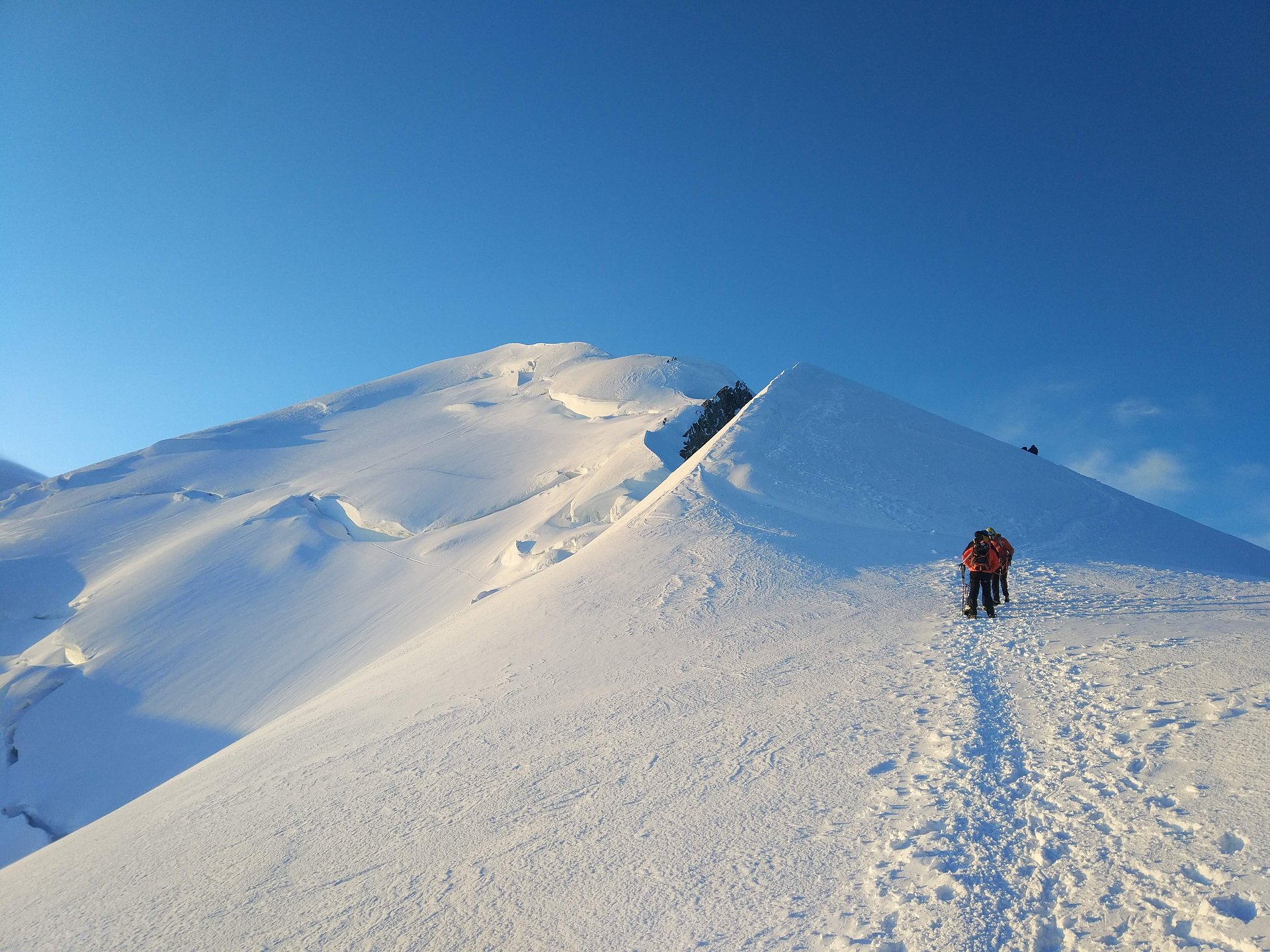
Beautiful morning lights heading towards the summit
5. The essential role of physical preparation
One of the most significant predictors of success on Mont Blanc is training quality. Many climbers underestimate the physical demands:
High altitude.
Long days.
Heavy packs.
Technical terrain.
Continuous elevation gain.
To address this, KooKoo Climb provides a structured Workout Plan specifically developed for Mont Blanc ascents, which includes:
Cardiovascular conditioning (stair climbs, interval training, long aerobic efforts).
Strength training (legs, core, posterior chain).
Balance and stability work.
Hiking simulation sessions.
Elevation gain training tailored to the climber’s location.
Crampon technique practice (optional pre-season alpine courses).
Following a proper training plan significantly increases summit success rates and reduces fatigue-related accidents.
6. Additional considerations many climbers overlook
There are several important aspects that new climbers often don’t consider but play a key role in a safe ascent:
Acclimatization
Climbing Mont Blanc without proper acclimatization drastically increases the risk of altitude sickness and reduces performance. We always recommend adding an acclimatization climb the day before starting the program.
Weather Variability
Mont Blanc’s weather can shift from calm to severe within an hour. Understanding wind limits, storm patterns, and temperature shifts is essential.
Mental Resilience
Exhaustion, cold, exposure, and altitude can test even experienced climbers. Being mentally prepared is just as important as being physically fit.
Guide-to-Client Ratio
Choosing a 1:1 guide ratio, as many of our clients do, increases safety and flexibility and eliminates the risk of having to abandon the ascent because another client cannot continue. However, we understand the costs involved in a 1:1 climb, and that's why most of our clients prefer to join a group of 2, so that the costs are less and the guiding ratio is 2:1.
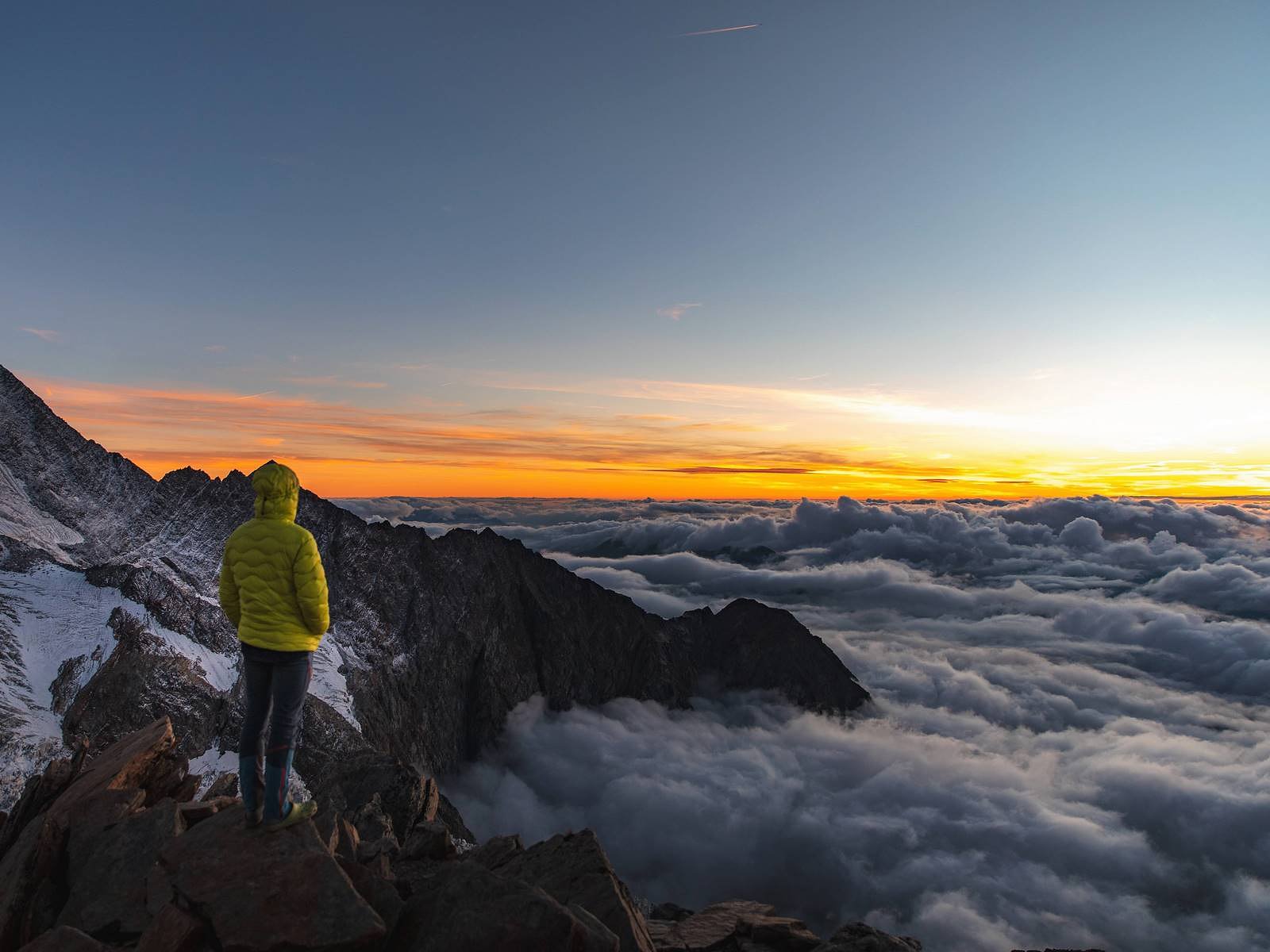
Sunset from the Tête Rousse hut
So, is Mont Blanc for everyone?
Mont Blanc is a magnificent mountain, but it is not suitable for everyone. It requires more than enthusiasm: climbers must arrive with solid fitness, proper alpine skills, glacier experience, and strong resilience.
Having said that, we want to encourage anyone who is committed to climbing Mont Blanc to train consistently during the year leading up to their attempt. At the end of the day, even though it isn’t a mountain for absolutely everyone, Mont Blanc is a totally achievable objective if you train properly and stay focused. You don’t need to be a superhuman.
With the right preparation, training, acclimatization, and guidance, Mont Blanc becomes an achievable and unforgettable goal for many aspiring mountaineers.
At KooKoo Climb, our mission is to make that journey as safe, enjoyable, and successful as possible by combining top-tier guiding, expert planning, and a dedicated training program tailored to the climb.
Check our 5-day PROGRAM and see what's included.
Also, if you plan to become an alpinist, but you lack knowledge, check our 4-day Alpine Climbing Course in Chamonix